
1. What Actually Works in a Pub Kitchen
Many operators experience the problem of breading separating from pork or chicken cutlets. Standard search engine advice often fails to resolve this issue in a commercial kitchen environment. A close analysis of top search results reveals immediate contradictions: the guidelines instruct the cook to pat the meat completely dry with paper towels, yet subsequently recommend soaking the protein in buttermilk, while simultaneously listing “using wet meat”.

As you can see, (According to Google AI) one red line says to “pat your meat dry with paper towels.” TThis contradiction reflects a fundamental misunderstanding of line execution. During kitchen training, culinary apprentices are conventionally taught to remove all surface moisture from the meat. When the breading still separates after strict adherence to this rule, the standard instruction is simply to repeat the process more thoroughly. However, 6 years of operational experience in kitchens demonstrates that this conventional approach does not address the actual root cause of breading failure.
2. Why Moisture is Essential for Breading
Contrary to conventional advice, surface moisture is a critical binding agent because dry flour cannot adhere to a completely dehydrated protein surface. Reliable bonding relies on the combination of moisture, flour, and physical pressure: the meat should remain slightly wet so that flour can be firmly pressed into the surface by hand, creating a stable base that holds the subsequent egg wash or liquid batter mix, followed by firmly pressed breadcrumbs.
This principle is proven by standard workflows like British fish and chips, which relies on wet batter adhesion, and Southern fried chicken, which utilizes a flour-to-wet-batter sequence without any drying stages. (In my German Fried Cheese recipe, I spray water on the cheese before dredging.)
3. Still having issues? Try this Batter Recipe.
Batter formula (1 portion):
- Cold water: 80g~100g
- AP flour: 30g
- Corn starch: 10g
- Egg: 1
- Salt: 1g
You can also use commercial batter mixes (I use egg powder-based batter in my own kitchen). This is sticky batter. So adjust to your needs. But make sure it’s: Slightly thick, runny, and sticky enough to hold breadcrumbs.
4. Frying Still too Soggy?
The root cause of breading separation is often meat thickness rather than surface moisture. Pounding the protein thinner ensures uniform heat transfer and rapid crisping during the frying cycle. In terms of frying physics, a product that floats immediately indicates low moisture density and proper oil displacement, whereas sinking signifies excessive internal water retention.
When executing a menu item with thick-cut protein, the operator must employ a dual-temperature strategy: cook at a low temperature to tenderize the interior, followed by a high-temperature flash fry to crisp the exterior.
For maximum structural crunch, mix coarse panko at a 50% ratio into the final breading layer.
5. Result
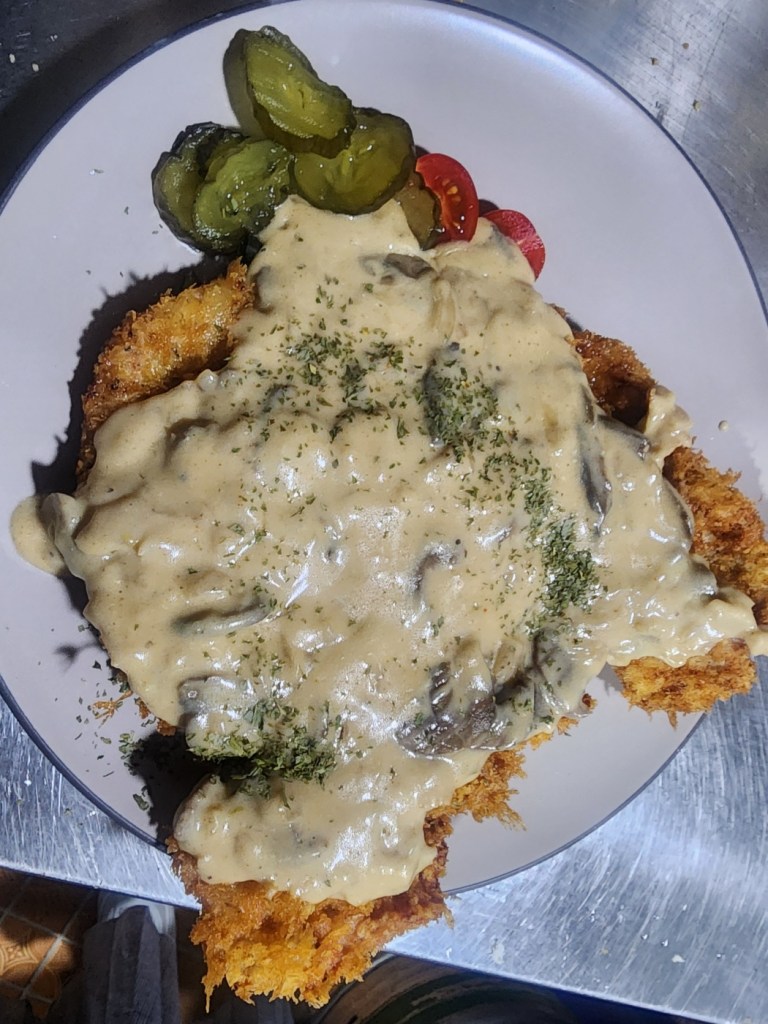
These cutlets below were made with wet meat, no egg, and a simple flour-water batter
No bread falling off. Let’s see.
Photo 1: Schnitzel
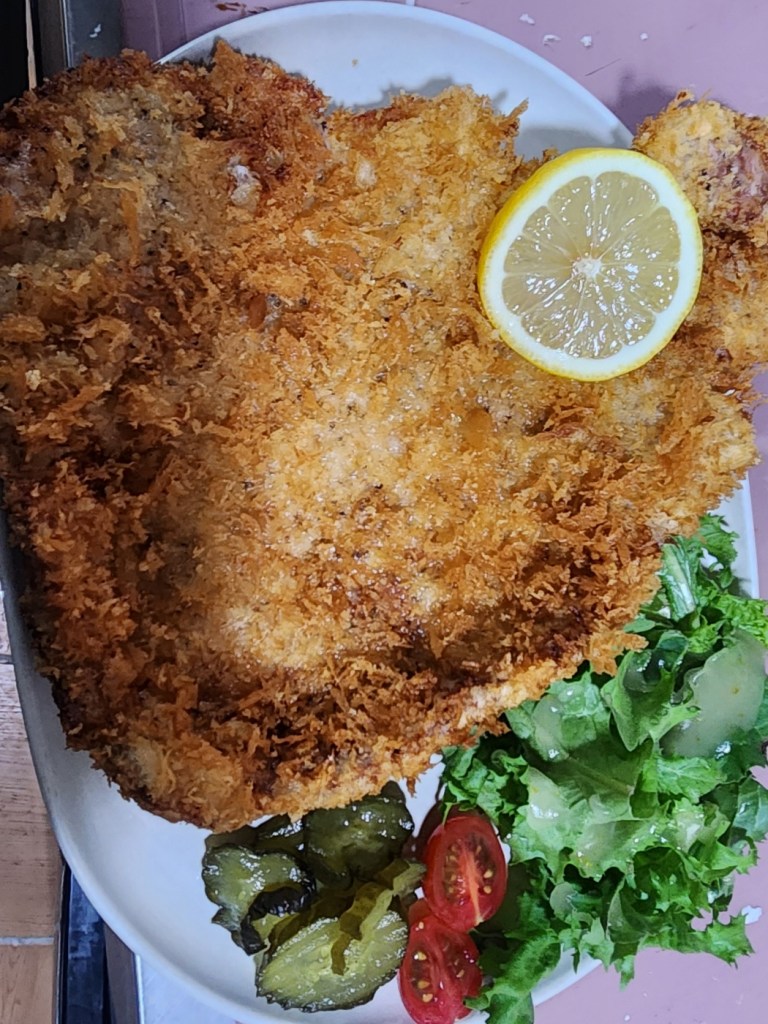
Photo 2: Jägerschnitzel

If you enjoyed this article, you can support the project – thank you!