
1. Photo
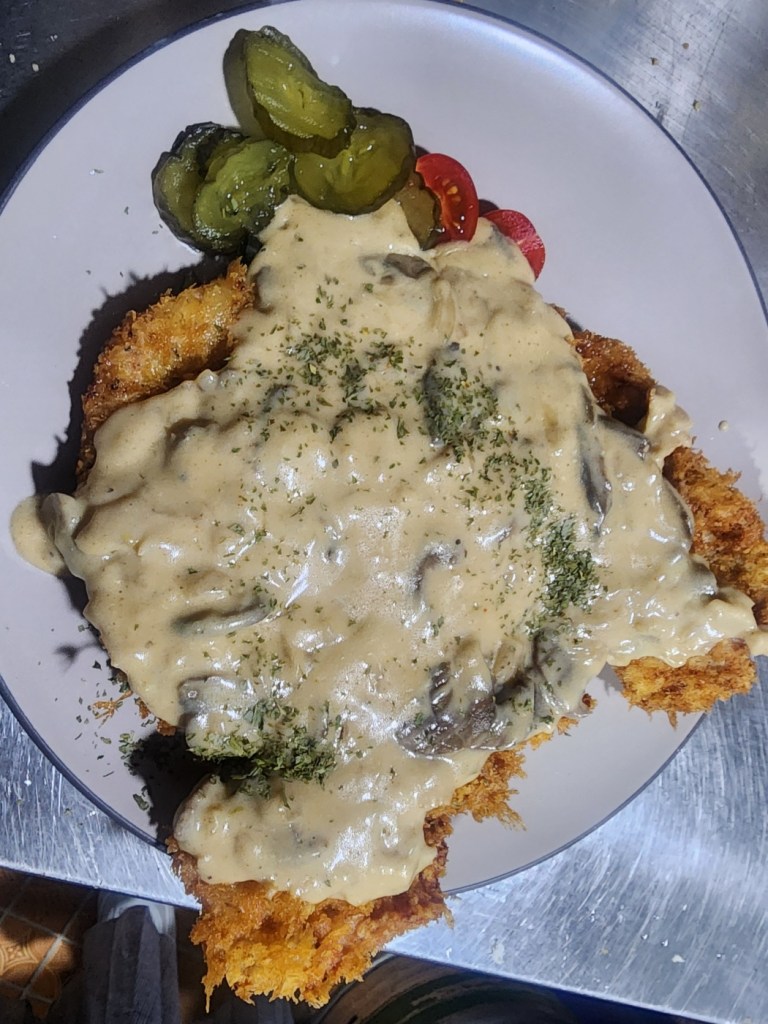
This formulation represents a proven, high-volume menu item that historically served as a top-selling accompaniment for beer offerings. Developed through real-world operational execution, this standardized recipe is compiled to preserve the specific preparation metrics and maintain consistent product quality for commercial applications.
2. Flavor Structure
The structural foundation of the Jägerschnitzel (hunter’s cutlet) relies on a precise, multi-layered umami profile rather than a simple dairy base.
The flavor architecture balances the natural sugars of butter-caramelized onions with the deep glutamates derived from mushrooms and chicken stock. While cheddar cheese introduces a salty depth, heavy cream functions as a neutral emulsifying agent to integrate these intense components. At the point where the fat content approaches saturation, Hungarian Szeged paprika powder introduces a smoky acidity and controlled heat to cut through the richness.
When the crisp exterior breading absorbs this dense sauce, the controlled moisture migration creates a distinct texture—softening the crust while preserving the internal juiciness of the meat—establishing a flavor profile optimized to drive beverage sales.
3. Base Ingredients (5–6 portions)
(1) Sauce
- Chopped onions 450–500g
- Garlic 5–6 cloves
- Frozen button mushrooms 500g (thawed overnight in the fridge. Frozen mushrooms are much cheaper than fresh mushrooms.)
- Maggi chicken stock 36g
- Cheddar cheese slices ×3
- Hungarian Szeged paprika powder (or crushed red pepper) 1 tsp
- Cold milk 750g + cornstarch 4 TBS
- Heavy cream 500g (frozen is fine)
(2) Main
- Pork cutlets, pan-fried or deep-fried
(3) Cooking Process
- Onion caramelization: Melt the butter over low heat. Add the onions and season lightly with salt and pepper. Continue cooking past the translucent stage until the onions achieve a distinct golden brown color to concentrate their natural sweetness. Deglaze the pan periodically with small increments of water to prevent scorching and ensure even color distribution.
- Mushroom moisture extraction: Introduce the thawed mushrooms along with their residual thawing liquid to the pan. Add a pinch of salt and pepper, and cook continuously until the moisture evaporates completely. Introduce the minced garlic at the final stage of this process, sautéing briefly to extract the aromatics without burning the garlic.
- Cream base integration Combine the following components into a pot: the milk-cornstarch slurry, heavy cream, cheddar cheese, chicken stock, and Hungarian paprika powder. The paprika serves as a critical structural ingredient, injecting a specific smoky aroma and sharp acidity to balance the dairy fats.
- Viscosity control and reduction: Simmer the mixture gently over low heat for approximately 20 minutes, stirring occasionally to prevent adhesion to the bottom of the pot. The target consistency is achieved when the sauce falls in thick droplets from a ladle rather than flowing continuously. If the texture remains too thin, introduce a supplemental mixture of one tablespoon of milk and cornstarch to adjust the binding. The cornstarch must be completely dissolved in cold milk beforehand to create a uniform slurry prior to introduction. Do not introduce dry cornstarch powder directly into a hot pot; doing so causes the starch to gelatinize prematurely and clump, which prevents proper emulsification and fails to establish the required viscosity.
- Final seasoning calibration: Remove the pot from the heat and allow the sauce to cool slightly. Perform the final flavor tuning by adjusting the salt, pepper, and chicken stock in precise one- to three-gram increments to ensure profile consistency.
4. Summer Supply Chain Alternatives
During summer periods, heavy cream availability may become constrained. If standard heavy cream is inaccessible, substitute it with a high-fat whipping cream possessing a minimum 35% milk fat content (e.g., European-style formulations such as Elle & Vire 35%).
A primary disadvantage of commercial whipping cream substitutes is the presence of undesirable, artificial aromatic notes. To counteract this defect, introduce one cup of dry red wine during the onion caramelization stage. The inherent acidity and tannins within the wine effectively mask the substandard cream profiles, stabilizing the final flavor.
As a primary preventative measure, it is highly recommended to freeze standard heavy cream in advance during periods of stable supply to secure a consistent inventory buffer.
5. Practical Service Strategy
While the schnitzel is frying, initiate the sauce preparation by heating 4 ounces of the sauce base in a small pot. Introduce a small volume of milk to adjust consistency and maintain low heat for one to two minutes. Allowing the mixture to reach a bubbling state ensures proper thermal sterilization before service. Cool the sauce slightly before pouring it directly over the finished schnitzel.
The standard plate configuration includes sauerkraut, pickles, and boiled potatoes as the baseline accompaniments. If a customer requests french fries as an alternative or supplemental starch, apply the designated upcharge to the order.

If you enjoyed this article, you can support the project – thank you!