
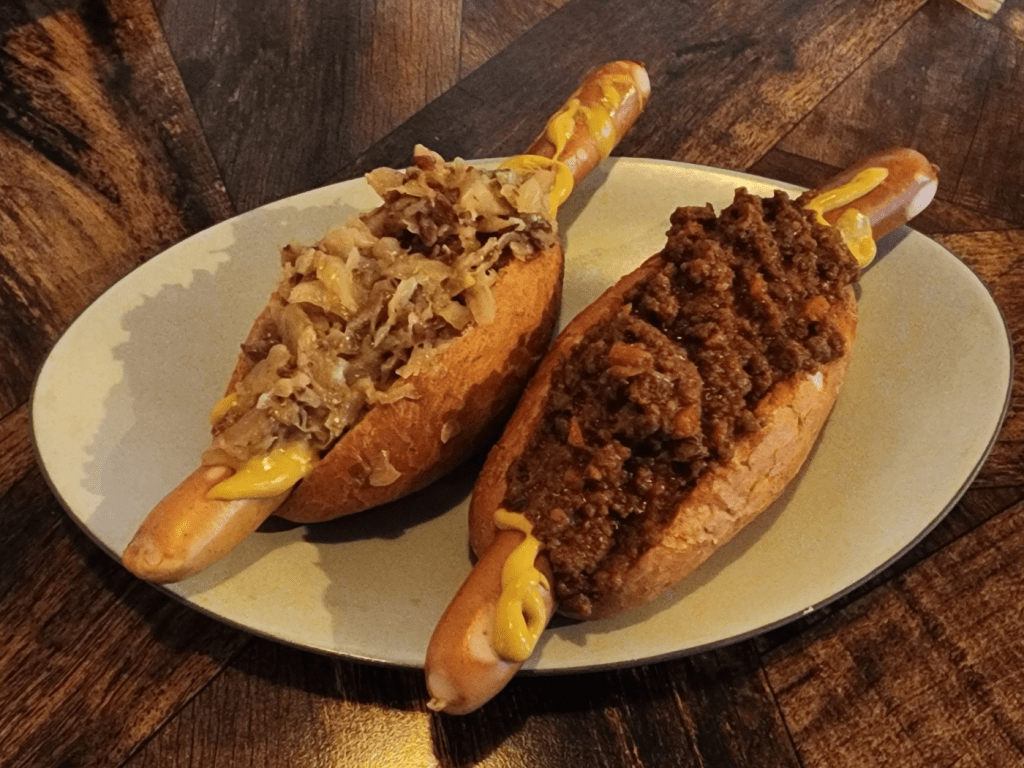
Serving raw sauerkraut directly from the jar introduces excessive liquid, which degrades the texture of the bun and creates an unbalanced flavor profile due to the sharp acidity. A proper German-style kraut dog requires a different approach, focused on balance, execution speed, and efficient kitchen preparation. This refined method has been tested in a high-volume restaurant environment, demonstrating consistent operational efficiency and positive customer response.
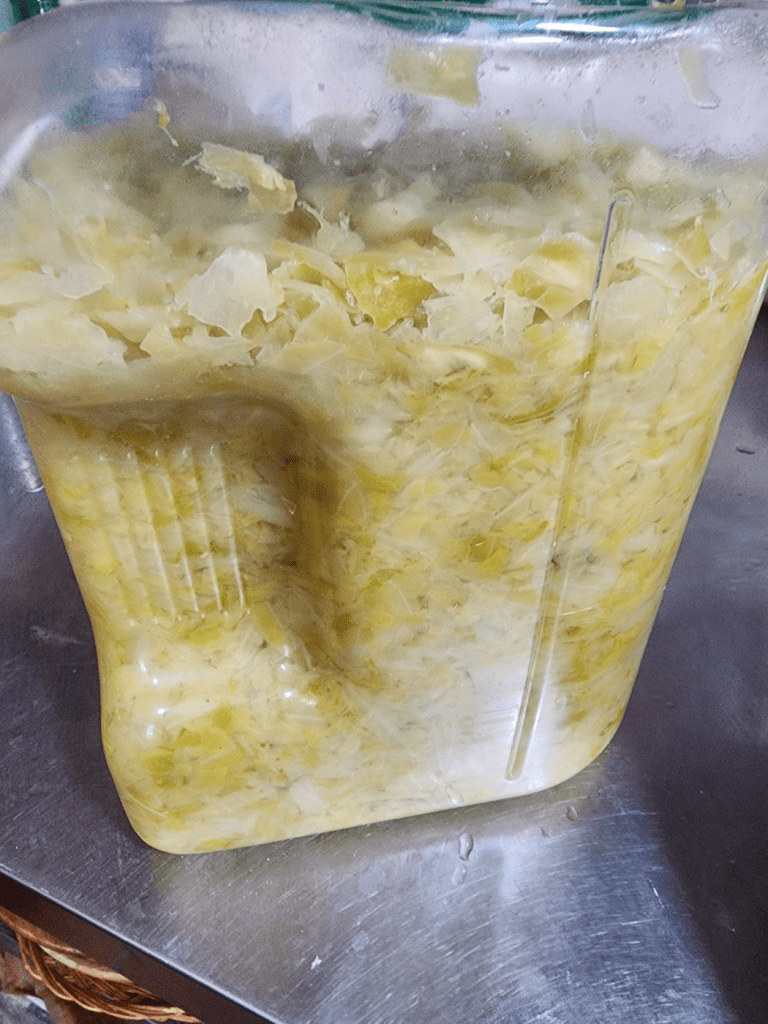
Photo: My own kraut batch. (I will upload Recipe on request — it’s easy. But I know most pubs use canned kraut. That’s also good.)
1. Ingredients
(1) Toppings
- 500g sauerkraut
- 500g chopped onion
- 100g chopped bacon
- 1~3 TBS sugar (add gradually to balance sourness — sweet + sour makes the flavor smooth)
- 3 TBS all-purpose flour (for thickening)
- Salt, pepper to taste
- 1 tsp garlic powder
- 1 tsp caraway seeds (optional — adjust for taste)
- Some chopped jalapeños (for topping)
(2)Sausage
Nürnberger or Wiener sausages imported from Germany are the ideal choice for this preparation. If these are unavailable, high-quality alternatives from wholesale distributors are acceptable.
(3) Bun
A baguette is the preferred bread option, though soft buns may also be used. Sourcing pre-made bread is sufficient, provided the buns are toasted in an oven or on a pan immediately before serving to ensure proper texture.
2. Cooking the Kraut Base
- Melt one tablespoon of butter in a pan over low to medium heat. Add the chopped bacon and cook slowly to render the fat. Maintaining a moderate temperature between 60°C and 70°C allows for clean oil extraction without burning the meat. Stir the mixture gently during this process.
- Remove the cooked bacon from the pan to prevent it from burning during the next stage. Add the onions to the remaining fat and sauté until they turn translucent with slight browning. Deep caramelization is unnecessary. If the onions brown too quickly, add a small amount of water to deglaze the pan and incorporate the flavors.
- Add the sauerkraut to the pan and stir over medium-low heat. If the mixture appears dry, add a small volume of water to maintain moisture.
- Taste the mixture and adjust the acidity by adding sugar incrementally, starting with one tablespoon up to a maximum of three tablespoons. One to two tablespoons is generally sufficient. Season the mixture with salt, pepper, garlic powder, and the reserved bacon pieces.
- Once most of the liquid has reduced, stir in three tablespoons of flour. This binds the remaining moisture, thickening the mixture so it sits securely inside the bun without causing sogginess.
- Add whole caraway seeds to the pan, adjusting the quantity according to preference. Using unground seeds provides the desired texture and flavor profile. If texture retention between the teeth is a concern, ground caraway seeds may be used as a substitute for the whole seeds.
- Allow the mixture to cool completely before transferring it to the refrigerator, where it can be stored for three to four days. Reheat the portion briefly in a pan before service to remove any accumulated moisture, though it may be served directly from storage during high-volume periods.
3. Service Strategy
- Bring water to a boil, then reduce the heat to maintain a gentle simmer. Preheating and maintaining the water at this temperature during peak operational hours ensures faster execution.
- Submerge the sausage in the simmering water until the core temperature reaches 72°C. Avoid a rolling boil, as high heat can cause the casing to burst.
- If using Nürnberger sausages, remove them from the water and pan-sear the exterior before assembly. For Wiener or other standard sausage varieties, the boiling step alone is sufficient. Dry the surface of the sausage thoroughly with a paper towel before pan-searing. Heat the pan until a few drops of water bead up and roll across the surface, then apply a thin layer of oil before introducing the sausage. Removing excess moisture prevents the oil from spattering, ensuring safe handling during the cooking process.
- Toast the bun using either a pan or an oven prior to assembly to achieve the proper texture.
- Place the heated sausage into the toasted bun, then apply a layer of classic mustard.
- Place the prepared sauerkraut mixture on top of the sausage. Serving the kraut reheated is recommended for optimal quality, though it may be applied cold during high-volume periods. Finish the dish by adding a small amount of chopped jalapeños on top.
4. Final Note
This item offers a distinct alternative to standard sauerkraut hot dogs. It features a well-balanced flavor profile alongside an optimized preparation process designed specifically for bar operations, replacing wet, raw sauerkraut with a properly conditioned German-style topping. Implementing this method allows the establishment to confidently market a superior hot dog menu that outperforms conventional variations.
Also check Other Recipe: Fried Chicken | German Fried Cheese

If you enjoyed this article, you can support the project – thank you!
[…] Dog assembly is the same as the kraut dog (link to previous post). […]