
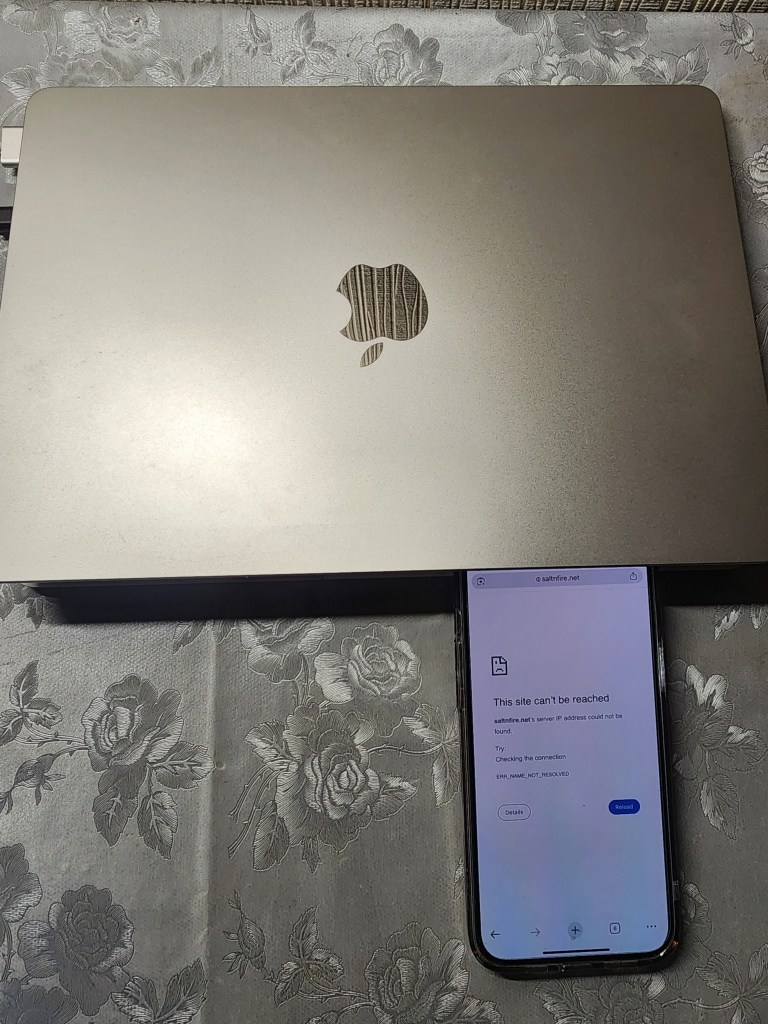
[Photo: My $1,000 iPhone Failed in Gori]
1. Prologue — A Lesson Learned in Front of Gori’s Wi-Fi
In Gori, the sun sets early. By 7 PM, the streets grow dark and people retreat into their rooms. The day closes like a slow-moving curtain. I go into my room and open my MacBook, ready to disappear into the internet like everyone else.
But—My MacBook and iPhone refuse to connect. “Weak Internet Connection.” I ask my landlord. He shrugs. Nothing unusual. But then—my old Samsung Galaxy connects instantly. I sigh. And the scratched-up Galaxy in my drawer seems to whisper: “Bro, I work.”
It felt like an anonymous soldier I met under the fortress of Gori— the one that survives while the polished army collapses. That’s where the story begins.
2. Scene 1 — Apple’s Beauty Only Works in a Perfect World
The iPhone and MacBook aspire to perfection. And yes, perfection is beautiful. But perfection also means fragility. It means a device works only under ideal conditions. Flawless authentication. Stable signal. Clean, interference-free networks. Anything less, and the system simply stops.
But the world isn’t a polished tech lab. It’s messy. Dusty. Inconsistent. And in a small city like Gori, even the Wi-Fi is patchwork. The router mixes 2GHz and 5GHz bands. Security is weak (WPA). Signal strength fluctuates like a dying candle. In this environment, Apple doesn’t adapt. It just freezes.
3. Scene 2 — The Rise of the Galaxy
So I open my drawer and pull out the old Galaxy I brought from Seoul—scratched, fading battery, nothing impressive. People often mock Samsung’s “weak security.” But that looseness is exactly why it survives. Weak signal? Weird frequency mix? Sketchy security? It doesn’t matter. The Galaxy connects anyway. It doesn’t demand perfection. It just needs “good enough.”
Perfect things are beautiful. Flexible things are strong.
4. Scene 3 — And Suddenly, It Connects to Allergies
A thought hits me. Kids today grow up in hyper-clean environments: sterilized water, disinfected homes, air purifiers, antibacterial wipes. But that very cleanliness weakens their immunity. A tiny bit of dust or an unfamiliar food sends their bodies into alarm mode.
Back when I spent time in Vietnam, I got wrecked by street food on day one. But the locals were fine. They laughed and told me: “You’ll get used to it.” I realized then—Growing up in overly sanitized Seoul had weakened me. When everything is perfectly controlled, the system becomes fragile by default.
5. Scene 4 — Why I Couldn’t Ask the Landlord to Change the Router
In Korea, I would’ve demanded: “Sir, could you replace the router? I’m paying rent.” But in Gori, I didn’t. Because that’s not the life I chose to live here. Gori is not a perfect city. Services aren’t perfect either. But strangely, that makes the place comfortable. I have a hotspot. The Galaxy works. It’s not elegant, but it functions. Today it doesn’t connect. Tomorrow it might.
That looseness—that unpredictability— feels oddly peaceful.
6. Scene 5 — And Somehow, It Becomes a Survival Philosophy
The things I write on my blog, They’re not perfect academic theories. But everything I write is true because it is rooted in my own experiences and the insights gained from them. As a sovereign individual and a producer, I explore ways to survive while evading the predatory nature of the state. It is not perfect, but that is why it is resilient and strong.
Perfect things break easily. Imperfect things endure because they adapt. A system that functions only under ideal conditions is elegant, but weak. Restaurants are the same. People dream of perfect interiors, perfect menus, perfect locations. Reality laughs at that. Staff quit unexpectedly. Rent rises. Customers disappear. A business that runs only under perfect conditions is doomed. A business that crawls forward even under bad Wi-Fi, low budget, and unpredictable chaos—that’s the one that survives.
7. Epilogue — What Gori’s Wi-Fi Taught Me Again
When the iPhone died, the Galaxy stayed alive. When Vietnamese street food killed me, it nourished someone else. When the router failed, the hotspot worked. My blog isn’t perfect. My YouTube isn’t perfect. The Wi-Fi isn’t perfect. But accepting imperfection—living with it—moving through it— that’s what builds strength. The Wi-Fi is dead again, but my Galaxy hotspot is alive. And I’m writing this through that tiny, stubborn signal.
8. Technical Notes — The Real Fix Behind Gori’s Wi-Fi
It turned out the problem wasn’t the Wi-Fi itself, but Apple’s fragility. Gori’s router uses mixed 2.4/5GHz bands, unstable local DNS, and weak WPA security. Samsung Galaxy devices simply adapt and connect anyway. Apple devices don’t. They require clean DNS responses and stable authentication. Anything less, and the system collapses.
Installing Cloudflare’s 1.1.1.1 app solved everything instantly. Why? Because it bypassed the router’s unstable DNS and forced a reliable, global DNS system. Nothing else changed — not the router, not the signal. Only the “interpreter” changed. And suddenly, the world became readable again.

If you enjoyed this article, you can support the project – thank you!