
I once had a dish called “Sausage with Tomato Curry Sauce” on my menu. It didn’t sell well. Then I changed the name to “Currywurst” — nothing else changed — and suddenly it became one of the most popular items. Why did that happen? Let’s break down why “the less customers know, the more they’re willing to pay”, and how this principle can shape your menu naming strategy as a pub owner.
1. Generic naming tips aren’t enough.
If you Google “menu naming tips,” you’ll find the usual stuff:
- Use adjectives.
- Mix in foreign words.
- Keep it short and memorable.
- Emphasize premium ingredients.
Okay, sure. But why do those things work? And is there any logical reason beyond “just sounds good”? Not many posts explain that part.
(1) Social Proof from Seoul
Check this news article from South Korea: Chosun Ilbo – [See: English & French Signs Dominate Local Streets] In the trendiest area of Seoul, you can’t find Korean signs anymore — it’s all English and French. People don’t understand the words, but they still say: “Looks cool. Feels premium.”
(2) A Czech Beer Poster Changed My Thinking
Here’s a poster I received from Pilsner Urquell, a Czech beer company.
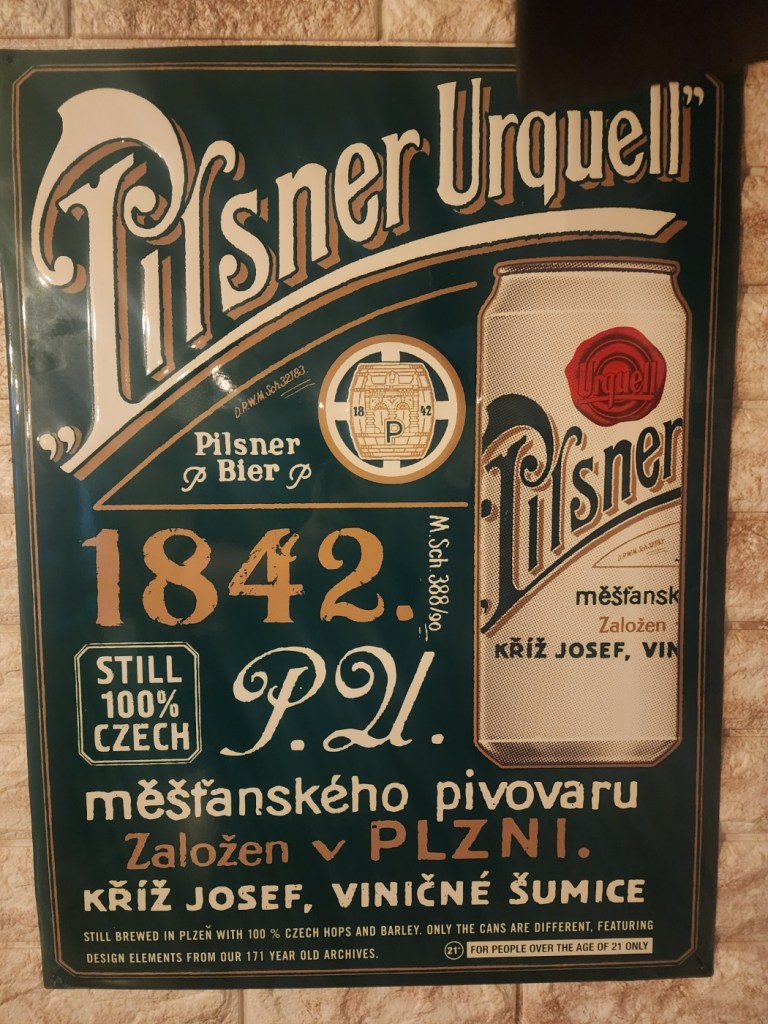
I can’t read Czech. But the moment I looked at it, I had this “Whoa” reaction. The tiny English text gave me a sense of familiarity. The Czech words — with their medieval font — felt mysterious, refined, and kind of romantic. It reminded me of romantic Prague.
That’s when it hit me: When people lack information, they make emotional decisions.
Let’s apply this structure to how we name dishes — and price them — in a pub.
(3) My Personal Case: When I Tried to Be Too Honest
Early on, I tried naming dishes with full transparency. I’d read a Japanese book called Process Economy that said “Sell the process, not the result.” So I changed the names like this:
- Currywurst → Sausage with Tomato Ketchup Curry Sauce
- Jägerschnitzel → Schnitzel with Mushroom Cream Gravy
Result? Not great. Customers would just say, “Can I get the tomato sausage?” It didn’t sound appealing. Sales were low. Then one day, I switched everything back to the original German names — Currywurst, Jägerschnitzel — and boom. Orders went up. They’re now my flagship items. Same dishes. Same cooking method. Just a different name.
(4) Why Does This Work?
When you use long, descriptive names, customers gather too much information. They can mentally estimate the cost of the ingredients, labor, and process. Once they know too much, they start judging whether the price is “fair.” But if all they see is “Currywurst” in bold German letters with a juicy photo? They don’t know the process. They don’t know the ingredients. So they rely on what the word reminds them of: Germany → Precision, quality, honesty → Must be good.
When people lack information, they rely on emotion. When the category feels trustworthy, they’re more likely to say, “Sure, I’ll try it.”
Information asymmetry creates pricing freedom. Here’s how it plays out:
- Information gap → Association with upper-level category (Germany, Europe) → Emotion-based decision (no rational breakdown possible) → Higher perceived value → More sales, justified premium
- On the flip side: Too much detail → Customers analyze cost, ingredients, and process → Emotion fades, perceived value drops → Premium price not accepted
2. This Isn’t Just My Theory
This principle is backed by psychology. Daniel Kahneman and Amos Tversky explained two systems in our brain:
- System 1: emotional, intuitive, fast — activated under uncertainty
- System 2: logical, rational, slow — activated when all facts are present
So yes — when people don’t have full information, System 1 takes over and emotion decides.
(1) Emotional-Cognition Framework for Menu Naming
Let’s organize this idea into a simple 2×2 framework:
| Customer Feelings | Strategy |
| Likes it & Understands it | Use direct names, fair prices, high turnover |
| Likes it & Doesn’t understand it | Use emotional names, premium pricing possible |
| Dislikes it & Understands it | Avoid – can’t sell it |
| Dislikes it & Doesn’t understand it | Rebrand to create curiosity or positive emotion |
(2) Practical Tips
If you’re running a pub, and your menu items don’t offer separate value through explanation (like fine dining), then don’t explain too much. Instead:
- Let customers imagine.
- Use foreign languages — especially from countries with positive emotional associations (Germany, Japan, Italy, etc.).
- Call your fries “Pommes” or “Kartoffel” and make them feel exotic. Just add a little German Flair while you’re at it. I know it sounds ridiculous, but if it has a vibe, it works.
The less they know, the more their imagination works. The more they imagine, the more they’ll pay.
And that is what makes a perfect menu name.
Up Next
[See: Why It’s Hard to Raise Prices When Customers Know Too Much]
I’ll be writing about how even price hikes are often emotionally accepted — if done right.

If you enjoyed this article, you can support the project – thank you!