
0. Background: From Word-of-Mouth to Aura Anchors
Earlier in this series, we examined how word of mouth actually works. People do not simply share information; they share stories and emotions to elevate their own status. Later, we introduced the concept of Aura Anchors. For people to spread your story organically, your business must offer something unique that others envy and want to talk about, much like the cases of The Blue Cat Bar from Ozark or the Marine Corps BBQ restaurant. Now, this new article series addresses a deeper question: What is that irreplaceable aura that makes a business feel genuinely special, and can we build it deliberately using lessons from art history? If you are interested in branding theory, this is where the discussion sharpens.
1. Why I Developed Aura Theory — The Age of Manufactured Authenticity
To clarify, aura in this context means a form of uniqueness that makes a restaurant feel irreplaceable. The term originates from Walter Benjamin’s 1935 essay, The Work of Art in the Age of Mechanical Reproduction, where he described aura as something unique, inimitable, and rooted in tradition and context. I am adapting this concept to the restaurant industry and customer experience.
We need to discuss aura now because the market is flooded with unverified personal stories, staged visuals, and manufactured authenticity designed to fake emotional depth. In Korea, restaurants frequently rely on dramatic origin stories, claiming they impressed a Michelin three-star chef or trained under a legendary master. Whether these claims are true matters less than their actual purpose: building a narrative, designing a visual stage, and borrowing external authority to simulate an aura.
This creates a paradox. While Benjamin argued that mechanical reproduction destroys aura, the opposite is happening today. In a world of copies, the authentic becomes highly valuable, making “authenticity” a definitive buzzword in modern branding. Therefore, this series asks whether we can design a genuine aura instead of fabricating stories, and how independent restaurants can apply this without massive budgets or fake mythology.
2. Existing Theories on Aura: From Walter Benjamin to Jean Baudrillard
While Walter Benjamin introduced the concept of aura, later thinkers pushed it further. Most notably, Jean Baudrillard proposed the idea of hyperreality in Simulacra and Simulation (1981), describing a world where simulations feel more real than reality itself. Baudrillard argued that people no longer consume reality, but rather images of reality. For instance, a commercial featuring diverse people laughing and playing sports projects an ideal version of freedom and inclusion—a designed fantasy that feels better than actual life. While Benjamin warned that copies destroy the original, Baudrillard stated that the copy replaces the original, and consumers use these images to define their identities.
Applying this to today’s restaurant industry, customers do not visit a trendy bistro solely for the food. They go to consume symbols of being cultured, adventurous, or elite. The meal becomes secondary to the identity being sold. This raises the question of whether we should play the same game by fabricating glamorous stories and designing spaces to match consumer fantasies. While tempting, this approach contains clear pitfalls.
(1) The Hidden Pitfalls of Hyperreality Marketing
First, consumer fatigue is rising. People are growing tired of polished fantasies and coded branding. Audiences quickly skip staged content, and platforms like Google have begun removing superficial, AI-generated text. Meanwhile, consumers are rediscovering small-batch crafts and local products because real effort still feels distinctly different.
Second, faking reality has become too expensive. In the past, showing someone enjoying a product was enough to capture attention. Today, marketing requires lifestyle contexts, creative storytelling, and emotional narratives just to earn a few seconds of engagement. Red Bull, for example, sells extreme sports and risk rather than a simple energy drink; the product merely carries an identity fantasy. This level of hyper-coded marketing requires massive budgets and production systems that small restaurants simply cannot sustain.
(2) The Opportunity for Small Business Owners
This is exactly where small restaurants hold a distinct advantage. Every authentic business already possesses a real story, a real process, genuine obsessions, and actual constraints—elements that simply cannot be copied. There is no reason to fake reality when you already have one. The strategy should not focus on manufacturing fantasies, but rather on identifying what is already real in your food, space, and daily routine, and aligning those elements with customer desires. This is the true source of aura. It does not come from superficial decoration or scripted origin stories, but from a reality that carries genuine emotional meaning.
The critical element is the narrative format that captures this fragmented, raw, and uncut reality, presenting it to the consumer as something unique and authentic. As we will see later, I define this as a synchronized alignment of lifestyle, mise-en-scène, and physical objects, which together create a cohesive representation of an experience consumers desire but cannot readily access.
3. Understanding Aura through Art History: Aura Is Not Born, It’s Built
Aura does not exist by default. That unique and irreplaceable mystique is not an inherent trait objects are born with, but rather something constructed inside the viewer’s mind. To understand how aura is built, we must focus on the creator’s life. This focus explains why modern consumers immerse themselves so deeply in a creator’s lifestyle and perceive an aura from it, and why lifestyle marketing for creators has become so heavily emphasized.
(1) Why Does Aura Emanate from a Lifestyle These Days?
The vast majority of modern individuals live not as producers, but as consumers and laborers. Consequently, they fail to understand that the very act of extracting raw materials from the world and transforming them into subjectively meaningful objects is what constitutes self-identity. They do not comprehend why that act—the very one performed by the Creator—is written in Genesis of all places. As a result, modern people possess a deep-seated need for a lifestyle that can express their self-identity.
And Due to the limitation of lacking production experience, modern people lack the connoisseurship to evaluate why a certain object is technically or historically special. Those who possess connoisseurship are individuals who have, at the very least, an indirect experience of creation. Lacking this connoisseurship means that the object and the self fail to connect with each other. Therefore, modern people use the creator as a lens to identify a lifestyle within the object. By doing so, they connect with the object, validate the creator’s lifestyle represented by it, and ultimately seek to discover who they truly are.
Music is a prime example. Those who have spent years listening to music, rapping, and writing songs possess firsthand production experience. Therefore, when they encounter someone else’s work, they listen intently to the sound, analyze the lyrics, and dive straight into that artistic world. The general public, however, lacks this experience and consumes things superficially, making them easily mesmerized by a rapper’s mere performance.
Consequently, a rapper’s lifestyle must first be appealing. When they synchronize that lifestyle into their work just enough for the audience to faintly sense it, the public praises it as “authentic.” Because modern individuals are institutionalized by state protection and no longer live as producers, they lack the ability to look past the surface and perceive the true essence and uniqueness of things. Thus, they capture distinct elements originating from the creator’s life and validate those elements within the product itself to experience a sense of exclusivity. This is precisely why a creator’s lifestyle, rather than the product itself, has become paramount in modern consumer society.
(2) Da Vinci’s Mona Lisa vs. Jone Doe’s Baekje Smile


[Source 1: Mona Lisa from Wikipedia ]
[Source 2: Baekje Smile from wikipedia ]


Imagine showing two images to a child: Leonardo da Vinci’s Mona Lisa and a Baekje Smile Buddha statue. The child will likely feel nothing special about either, which demonstrates that aura is not an innate property born within an object. Aura is fundamentally a subjective perception formed in the observer’s mind, drawing directly from the life behind the object. However, if you show those same images to an adult who knows who Da Vinci was, the reaction instantly shifts to a profound feeling of significance. Meanwhile, the Baekje Smile is frequently dismissed by the untrained eye as just another Buddha statue.
This contrast reveals a deeper truth about modern society. Because modern individuals are no longer live as producers, they often lack the ability to look past the surface and perceive the true essence and uniqueness of things. If we had direct experience producing sculptures or paintings as experts, we would be able to detect the aura from the craftsmanship alone. Lacking that production experience and connoisseurship, the general public can only perceive and find an artwork mysterious through the lens of the creator as a human being.
This is why Da Vinci’s life matters so much. He was a legendary polymath working across art, medicine, architecture, engineering, and mathematics, yet he completed very little. This scarcity makes his finished works feel like rare islands inside an ocean of unfinished sketches. He never married or passed down a family line, living freely with young apprentices while earning respect and financial backing from the nobility of Milan. This combination of ultimate freedom, wealth, and social protection is incredibly rare. When we see his designs today, we project our own desires of wanting to see the future. The Mona Lisa becomes a symbol of a life that feels impossible to replicate. If Da Vinci had sculpted the Baekje Smile, we would certainly view it as something extraordinary rather than just another statue.
(3) Vincent van Gogh — Aura Built from Tragedy
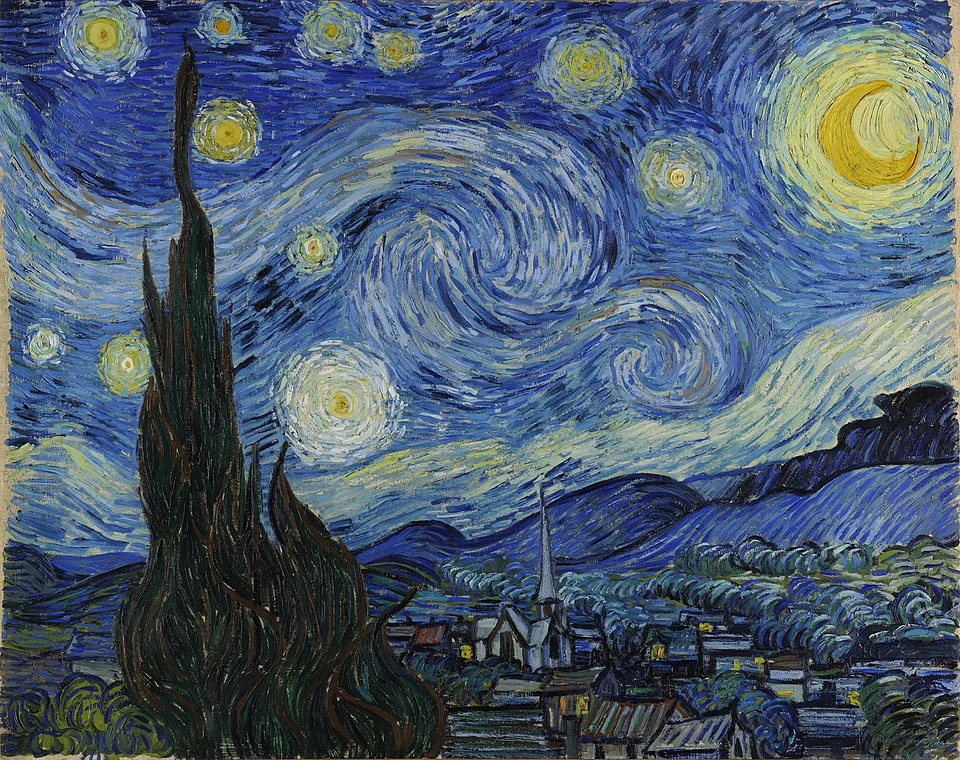
[Source: Starry night from wikipedia]
![[Source: Starry night from wikipedia]](https://en.wikipedia.org/wiki/The_Starry_Night#/media/File:Van_Gogh_-_Starry_Night_-_Google_Art_Project.jpg)
Vincent van Gogh demonstrates a different path to aura—not through the free genius, but through the tortured one. He sold only one painting during his lifetime, yet today people travel across continents just to stand in front of The Starry Night. Once you learn his story—the self-inflicted wound to his ear, his intense isolation, and his struggles with mental illness—the painting transforms. Modern society secretly fantasizes about breaking free and defying conformity, but most people choose to conform. Van Gogh did not. His chaotic brushstrokes and warped perspectives mirror his inner state, and once you know this narrative, you see a human struggle instead of just colors and lines.
This emotional transformation is what creates aura. Van Gogh died poor and in pain, gaining recognition only posthumously, which hits another universal human desire: the longing to leave something timeless behind. His paintings become vessels for our own search for meaning, built from a life that many imagine but are too afraid to actually choose. That collective fascination turns his work into a myth.
4. Aura = Life + Object Synchronization
Aura only appears when the life that was lived and the object that was created are perfectly synchronized, resonating with the audience’s desires.
(1) You Must Live the Life Others Only Fantasize About
Both Da Vinci and Van Gogh lived lives that the general public secretly wanted but could not choose. Consider The Last Supper. Technically, it has been so heavily restored that it is barely original, yet viewers must navigate strict reservations and time limits just to view it behind glass. This experience remains special because we are looking at our fantasy of living like Da Vinci. Aura activates when the viewer’s desire and the creator’s life vibrate on the same emotional frequency. This is why people struggling for basic survival rarely care about art; they lack the emotional bandwidth for fantasy.
Aura relies on a life path so uncommon that others can only admire it from a distance. We see the same phenomenon with Ernest Hemingway. His lifestyle of fighting wars, living in Cuba, and chasing bulls in Spain projected an image of raw freedom that many desired but could not live, granting his work a distinct aura for those who shared that fantasy.
(2) The Object Must Visibly Reflect the Life
Even with an extraordinary life, aura collapses if your creations do not reflect it. If Van Gogh had painted with the perfect anatomy and realistic, dramatic lighting of Caravaggio, no one would connect his work to madness or isolation. There would be no visible bridge between the life and the art. Because Van Gogh broke traditional rules of light, color, and perspective, his restless and distorted visuals make emotional sense alongside his biography. People project their own desire for emotional release onto the canvas.
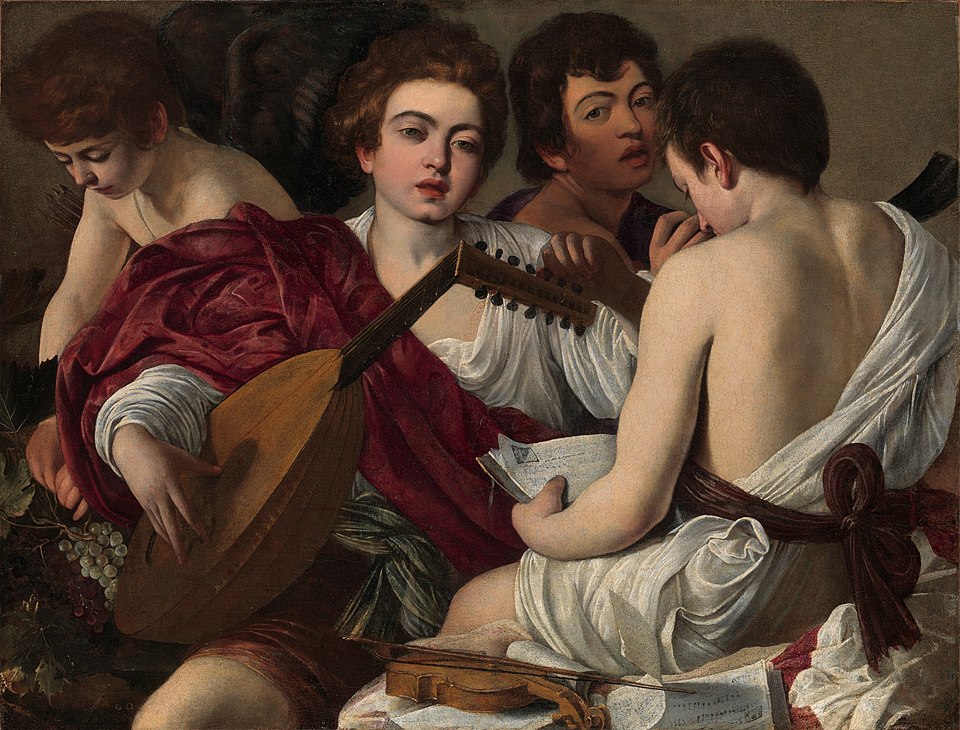
[Source: Caravaggio from Wikipedia]
![[Source: Caravaggio from Wikipedia]](https://en.wikipedia.org/wiki/Caravaggio#/media/File:Caravaggio_-_I_Musici.jpg)
When we see this synchronization, it offers a sense of hope that even if we are cold and hungry now, we might also leave behind a masterpiece. Personally, Wassily Kandinsky’s paintings never moved me because I lack the specific connoisseurship to evaluate abstract art on its technical merits alone. When I tried to interpret his work through his biography, his life story failed to interest me, causing me to dismiss his masterpieces as nothing special. Without a visible life-object synchronization, aura fades.
(3) Social Approval Confirms Aura — But Does Not Create It
Pierre Bourdieu argued that taste is shaped by cultural capital, implying that aura exists merely because elites dictate what is valuable. While I do not fully subscribe to his class divides, a clear line does exist between those who possess the connoisseurship to recognize an object’s uniqueness and those who do not. Those who lack this technical eye expand upon the aura first identified by true connoisseurs; they discover the creator’s life within the object and reprocess it into a form that gives meaning to their own lives. Public approval itself does not create an aura, which is why businesses that are simply “famous for being famous” do not last.
For instance, wine lovers worship Romanée-Conti, but since I lack connoisseurship in wine and do not know the creator, it holds no aura for me. However, if that wine is highly praised by a critic like Robert Parker—someone with true connoisseurship—an object that was previously meaningless suddenly feels extraordinary. Similarly, if you know hip-hop well and have experience rapping, you can listen to Sean Price’s music and instantly recognize his authenticity without knowing his biography. If you lack that connoisseurship, you naturally play the role of expanding the aura by following the critics, adopting his lifestyle as a lens to assign subjective meaning to his musical world.
(4) Formal Beauty Has Little to Do with Aura – Michelangelo vs. Da Vinci
Some argue that aura stems entirely from formal innovation rather than a creator’s biography, but this view overlooks how modern consumers actually behave. Let us compare Da Vinci with Michelangelo.
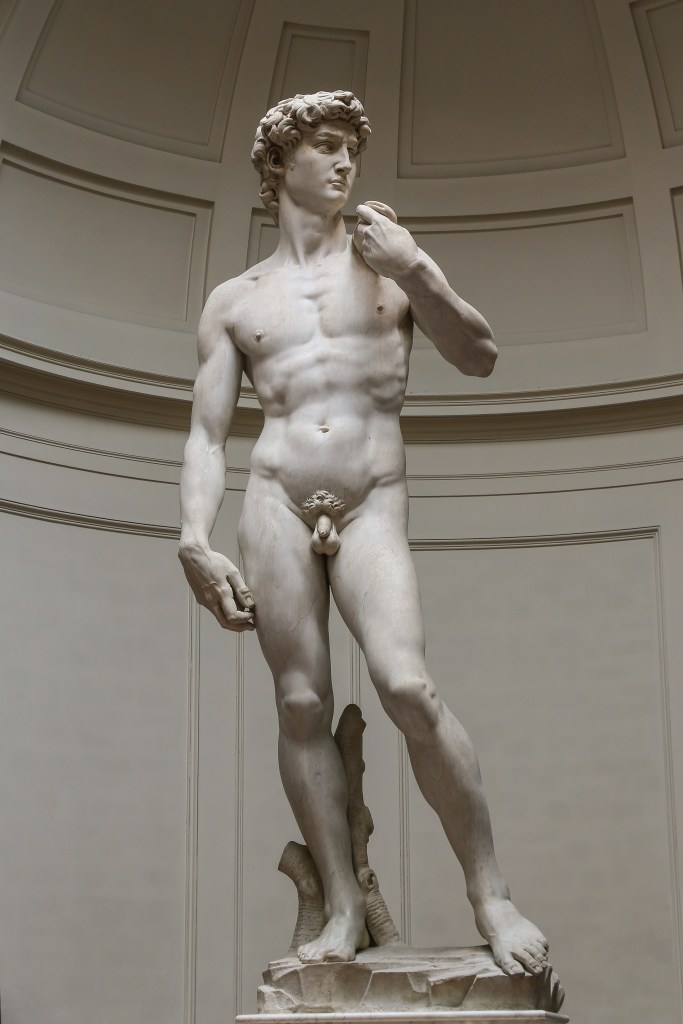

[Source : David from Wikipedia] [Source : Pieta from Wikipedia]
![[Source : David from Wikipedia]](https://en.wikipedia.org/wiki/David_(Michelangelo)#/media/File:'David'_by_Michelangelo_Fir_JBU004.jpg)
![[Source : Pieta from Wikipedia]](https://en.wikipedia.org/wiki/Piet%C3%A0_(Michelangelo)#/media/File:Pieta_de_Michelangelo_-_Vaticano.jpg)
In Italy, most tourists walk past Michelangelo’s sculptures, note their aesthetic appeal, and quickly move on. Professional sculptors, however, look at the Pietà—carved from a single block of marble with impossible anatomical accuracy and realistic fabric folds—and experience true awe. Because they possess connoisseurship, they detect the aura within the object itself, and their desire to connect with Michelangelo stems from that initial artistic shock.
But the general public does not understand the technicalities of sculpture. They feel a far greater sense of fantasy toward Da Vinci’s mysterious, unrestricted life than toward Michelangelo’s tedious, ascetic, and rigid existence. Therefor, Tracking the formal evolution of Michelangelo’s work offers little emotional resonance for the average consumer. Instead, a flood of cultural spin-offs pours out from a painting like The Last Supper, even though its figures are barely recognizable due to decay.
Ultimately, both creators are technically brilliant, but whether their aura registers with the modern public depends on who is looking. Because modern consumers lack direct production experience, physical products remain purely functional to them. They lack the connoisseurship to read the technology, history, and tradition embedded within a product. Instead, they look for how deeply the creator’s lifestyle is reflected in the work, using that connection to experience something unique and authentic. This alignment is the core engine of authenticity in modern consumer society.
5. Can This Be Applied to Food and Restaurants?
So far, we have examined how aura is constructed through artists and their lives. This raises the question of whether the same logic can apply to food. I argue that food alone struggles to sustain a long-term aura. While a dish can deliver immediate pleasure or surprise, repeating that emotional impact over time requires a deeper framework.
(1) Why Food Struggles to Carry Aura by Itself
First, a chef’s life rarely triggers the consumer’s imagination the way an artist’s life does. Chefs belong to daily reality rather than distant myth. While the documentary Jiro Dreams of Sushi is widely admired, its success relies on turning a rigorous routine into a broader philosophy. Without that specific narrative framing, most people would not project spiritual meaning onto sushi. A chef’s life is not inherently artistic, and a life devoid of artistry cannot radiate an aura. It is incredibly difficult for a chef to showcase a lifestyle that feels entirely new to the public or to shift their perception of a mundane phenomenon. While the lives of Picasso or Van Gogh represent an unattainable world that awakens our senses, cooking is an activity people already perform at home. Even if a consumer cannot mold sushi with 280 grains of rice, that technical gap does not create a myth.
Second, most diners lack an interpretive framework because food is fleeting. A piece of sushi disappears in one bite, making it too transient to accumulate deep emotional meaning on its own. Even if experts feel awe during a meal, that technical appreciation does not easily transfer to the average customer. Art remains on the wall to be contemplated, while food vanishes.
Third, food is fundamentally a survival object. Consumers prioritize safety, consistency, and value over radical artistic expression, making it difficult to embed struggle, obsession, or philosophy into the product. Aura emerges when an object reflects the creator’s life, but food structurally resists this synchronization. The primary requirement of food is to honestly deliver the flavor the consumer expects. Because its focus remains on function, true artistry struggles to find a place. Consequently, even elite chefs rarely generate mythologized fandom enjoyed by musicians or painters. They are respected, but rarely turned into legends.
(2) Restaurant Aura = Lifestyle + Mise-en-scène + Menu Sync
Restaurants generate aura not through food alone, but through the intentional design of space, which we can understand through the concept of mise-en-scène. In filmmaking, mise-en-scène refers to visual storytelling through the deliberate placement of props, lighting, and framing to create an atmosphere without relying on explicit explanation. In a restaurant setting, mise-en-scène allows a business to present a fantasy lifestyle that customers can momentarily step into, which is precisely where aura emerges.
In Korea: Aura Through Foreign Lifestyle Fantasy
This dynamic operates differently across cultural contexts. In Korea, which has historically been a culturally homogeneous society, foreign lifestyles easily become objects of admiration. Many successful restaurants use a formula that combines a lifestyle learned in Western Europe or the United States with a space designed to evoke that specific country and a menu that matches that national identity. When these elements align, customers feel transported, using the meal to temporarily live another life. Chefs often emphasize their training abroad because they are not just selling food; they are selling access to another world.
When I attempted to curate an aura for my German pub, I tried to blend a Central European lifestyle with matching mise-en-scène and food. However, because I am not German, I struggled to find the right persona to anchor the narrative. Staging a mise-en-scène for cultural powerhouses like the United States, the United Kingdom, Japan, or France is relatively straightforward, but I lacked a clear, intuitive sense of how to execute a distinctly Germanic or East Slavic vibe. Ultimately, I consulted with breweries like Paulaner and Pilsner Urquell, settling for logo-centric branding and simple props. This dilemma existed despite the fact that I had lived in Czechia, experienced various cuisines, and mastered sausage-making under a Metzgermeister. This difficulty demonstrates that designing a mise-en-scène based strictly on cultural elements, independent of the owner’s personal life or philosophy, requires a profound understanding of history and tradition that limited experience cannot easily express. Fortunately, as the food gained word-of-mouth traction, the number of foreign customers increased. To Korean customers who do not readily distinguish between various European nationalities, the mere presence of these patrons organically generated the missing Central European atmosphere.
In the U.S.: Aura Through Personal Values
In the United States, which is already multicultural, foreignness alone does not establish an aura. Instead, aura often forms around personal philosophies like naturalism or sustainability, or subcultures amplified by the media, such as minimalist or bohemian styles. The resulting formula relies on a value-driven lifestyle narrative supported by an eco-friendly or rustic mise-en-scène and a menu framed through ethics or science. Yet, this approach often stays at the level of a passing trend because food remains repeatable and linked to survival, limiting how deeply a personal struggle can resonate with diners.
To compensate for this transience, incorporating local symbols that showcase regional heritage can be effective. The United States is a melting pot of diverse ethnicities with a relatively short national history. Because of this, expressing identity through regional roots can generate a distinct aura for locals and tourists alike. Businesses need to find ways to connect their establishments with famous local stories, figures, and region-specific products. A prime example is Sapporo, Japan, where brands that heavily emphasize locality actively host regional events, operate museums, and have successfully grown into internationally recognized names. It clearly signals to patrons that they are participating in a rich local history, providing an excellent mise-en-scène that grounds the fleeting nature of the dining experience.
True aura goes beyond the combination of a chef’s philosophy and good food, because neither element is independently artistic. It requires a synchronized alignment of a lifestyle identity people want to belong to, a space that visually supports that identity, and a menu that fits the fantasy. Because food disappears quickly, what brings customers back is the identity they experience while being in the space. When becoming a regular at a restaurant says something meaningful about who the customer is, the aura is working, transforming the establishment into an extension of their own self-image.
6. Case Study 1 – Salzburg, Austria: Café Bazar
Let me start with a place I’ve actually been to: Café Bazar, in Salzburg, Austria.(Feature article: experience-salzburg.at)
Café Bazar has operated for over a century and carries the legacy of European salon culture. Historically, salons began as intellectual gatherings in aristocratic living rooms where philosophers, writers, artists, and scientists debated literature and politics. By the late nineteenth and early twentieth centuries, this culture migrated into public coffeehouses, establishing the traditional salon café. Café Bazar remains one of the purest surviving examples of this tradition.
The location itself carries historical weight, situated near Mozart’s birthplace and once frequented by cultural figures such as Arturo Toscanini, Max Reinhardt, Stefan Zweig, and Thomas Mann. Today, the space retains the atmosphere of an intellectual parlor. The menu remains strictly conservative, offering classic items like apple strudel, traditional tortes, and Viennese-style coffee. It avoids culinary trends and experimental concepts, prioritizing continuity instead.
Café Bazar achieves aura through a synchronization of three elements. Its lifestyle identity is rooted in cultural and artistic sophistication. Its mise-en-scène relies on a classical atmosphere, restrained interior design, and formally dressed waitstaff. Finally, its menu features authentic Austrian café cuisine. Because everything aligns, the aura remains stable. For writers and creatives, the space functions almost as sacred ground. You will not find tourists in flip-flops, loud wall decorations, or random fusion dishes; the brand, the space, and the menu speak the same language. If a visitor fails to find the establishment special, it does not mean the aura is missing. Rather, it indicates that the specific fantasy does not align with their personal lifestyle aspirations, as aura only activates when it resonates with the viewer’s desires.
7. Case Study 2 – New York, USA: The Algonquin Hotel
This one, I haven’t visited personally. But I found it while researching places with a similar kind of aura to Café Bazar. The Algonquin Hotel in New York. (Official website)
During the early twentieth century, its lounge served as the regular meeting place for the Algonquin Round Table—a celebrated group of writers, critics, and playwrights including Dorothy Parker, Robert Benchley, and Robert Sherwood, who were famous for their sharp wit and literary debates.
Today, the hotel preserves this aura by displaying historical photos, illustrations, and autographs of these authors throughout the space. For patrons with literary inclinations, the venue functions as more than a standard hotel bar; it is experienced as a space where the history of American literature remains tangible. This feeling is maintained through deliberate coherence. The literary identity matches the early twentieth-century vintage mise-en-scène, which in turn fits a menu of classic American dining and traditional cocktails. By avoiding flashy or trendy updates, the establishment relies on historical grounding to transform memory into an aura.
8. Case Study 3 – Perkinsville, Indiana: Bonge’s Tavern
While the previous examples rely on world-famous intellectuals, the same mechanics operate in rural environments. Bonge’s Tavern in Perkinsville, Indiana, is a small countryside tavern with only twelve tables, operating out of a converted barn. Despite several changes in ownership over the years, the current management prioritizes preserving the original atmosphere, keeping the establishment’s distinct aura intact.
The tavern maintains its identity through the same three synchronized components. First, the rustic mise-en-scène relies on chalkboard menus, Red Gold tomato murals, and early twentieth-century rural aesthetics, avoiding anything polished or staged for social media. Second, the restaurant supports a community-based lifestyle. Before dinner, locals and visitors gather outside in camping chairs to drink and converse, turning the wait into a social ritual akin to tailgating rather than a standard restaurant queue. Third, the menu aligns with the environment, offering heavy, comforting countryside dishes like duck, pork, and beef, with its signature Perkinsville Pork remaining a staple.
This balance attracts both local regulars with strong emotional attachments and curious outsiders drawn by the tavern’s reputation. Even from an outsider’s perspective, the slow rural lifestyle, the cozy visual rhythm, and the food are synchronized. The dishes do not explicitly preach a philosophy, but because they fit naturally into the lifestyle and space, they become part of the customer’s identity experience.
This case highlights why mise-en-scène must not be confused with interior design. Interior design is simply the arrangement of physical objects within a room. Mise-en-scène, however, is the deliberate coordination of those objects to evoke specific emotions and trigger subjective perception. When the lifestyle a business represents and the food it serves align with the color of the tables, the background music, the props, and the glassware, the environment becomes a meaningful experience. Conversely, if an establishment claims to represent a rustic, rural lifestyle but plays modern hip-hop while employing waiters in formal suits, the mise-en-scène collapses, and the aura fades.
👉 Wikipedia — Bonge’s Tavern
👉 Owner interview — Towne Post
👉 Owner interview — YouTube
9. When Aura is Missing: Three Common Breakdowns
To understand the strength of synchronization, we can analyze what happens when the formula collapses. If aura requires the alignment of lifestyle, mise-en-scène, and food, the failure of even a single component dismantles the entire impression.
(1) No Lifestyle Narrative
Consider a standard school cafeteria. Patrons eat simply to satisfy hunger and then leave. The environment does not alter the customer’s self-image, nor does it evoke any distinct emotional response. Consumers do not pay a premium for an establishment that fails to represent a specific, desirable lifestyle. Without a narrative anchor, the business remains a purely functional utility.
(2) Mismatched Mise-en-scène
Imagine an establishment blasting aggressive rock or hip-hop within an industrial chic interior, while waiters in formal suits ask, “Sir, may I assist you?” before serving Neapolitan pizza. The signals conflict entirely, leaving the customer unsure whether they are in a casual hangout or a formal dining room. This scenario is common among businesses attempting to appeal simultaneously to younger generations and older, traditional demographics.
Similarly, a shop might claim the identity of an authentic Parisian boulangerie but serve pre-packaged cold sandwiches, standard take-out coffee, and thawed, frozen croissants. The moment the reality contradicts the stated identity, the mise-en-scène breaks. Once the illusion cracks, the aura disappears.
(3) Food That Breaks the Story
This case was analyzed in detail in: Field Letter — Impressionist Concept Case Study .
A separate breakdown occurs when the menu disrupts the established narrative. Imagine a venue with a distinctly German-style interior that serves pasta, shakshuka, and French wine. Even if the spatial design and atmosphere project a broad European vibe, the specific food items disrupt the cultural rhythm. Aura requires consistency; a single dissonant element is enough to break the spell. For small business owners, enhancing consistency by removing conflicting elements is often more effective than adding new menu items.
10. Conclusion — Aura Comes from Synchronization
Pine and Gilmore described the Experience Economy as one built around sensory immersion. However, many operators misinterpret this concept by merely adding entertainment, superficial themes, or gimmicks, resulting in overdesigned concept stores or novelty cafes. True aura in the food service industry does not stem from entertainment; it stems from lifestyle immersion. It appears only when customers enter a space and instinctively wish to inhabit the lifestyle presented before them.
Modern commentators frequently note that the baseline quality of food has reached a uniformly high standard across the industry. In reality, this shift indicates that the general public lacks the specific connoisseurship required to evaluate technical culinary excellence on its own merits. As a result, small business owners often feel compelled to rely on expensive endorsements from influencers or established authorities, hoping the public will follow those expert validations to expand the brand’s aura.
Aura branding offers an alternative strategy built on the insight that the public seeks to understand an object through the lens of a lifestyle. Instead of purchasing external authority, independent operators must precisely synchronize the owner’s embodied lifestyle, the physical mise-en-scène, and the menu items. When this alignment is achieved, consumers project their own aspirational desires onto the space and its objects, perceiving a genuine aura. Through synchronization, the establishment ceases to be a mere business and becomes a legend.

If you enjoyed this article, you can support the project – thank you!