
In this article, I examine how a store’s distinctive, irreplaceable charm — its aura — fades over time. I combine philosophical frameworks with real business cases. The first case is Starbucks. Later, I’ll look at:
- Starbucks’ strategic options
- Reserve stores vs Japanese tea ceremony culture
- how small independent brands can build defensible strength
1. The Aura That Starbucks Lost
(1) Introduction to Aura Branding Theory
Aura Branding Theory is simple. A store creates emotional resonance when three elements align:
- Lifestyle — the lifestyle vision of the founder or owner
- Mise-en-Scène — the environment that expresses that lifestyle indirectly
- Objects — the artifacts that materialize that lifestyle
When these three synchronize, customers feel aura. For readers seeking deeper analysis, see:
- 🔥 Good Food Is Not Enough: What Really Makes a Restaurant Irreplaceable? (Introducing Aura Branding Theory)
- Wellness Dining Is a Trap for Small Restaurants — Here’s Why & Solution
- Why Upscale Korean Dining Is a Trap for Independent Owners
- Why “Authentic Experiences” Feel Fake — And Why Aura Can’t Be Faked (Pine & Gilmore Critics)
- 🔥 If It Can’t Be Felt, It Isn’t Real: Why Aura Beats Authenticity (and How to Build It)
- How Restaurants Can Build Aura Like Harry Potter Did: Lessons from the Aura Branding Model
- This Is Not a Feature War. It’s a Battle of Philosophy, Lifestyle, and Aura : ChatGPT vs. Gemini
With this framework in mind, let’s examine why Starbucks’ once-unique aura has faded.
(2) When Lifestyle Becomes Ordinary
When Howard Schultz built Starbucks, the idea was radical. He imported the Milanese espresso bar model into the U.S. Coffee was not just a drink. It was:
- leisure
- conversation
- barista–guest interaction
- social pause
At the time, this was cultural innovation. Innovation, however, has a lifecycle. What shocks first becomes normal later. After decades, the espresso-bar lifestyle stopped being special. In the U.S., Starbucks no longer exports culture. In Asia, it sells a diluted “New Yorker aura.” The original Guru’s vision has been fully absorbed. Rarity is gone.
Compare this with Apple under Steve Jobs. Whenever Apple’s lifestyle risked becoming stale, Jobs introduced a new defining object:
iMac → iPod → iPhone → iPad → AirPods
Each object refreshed the lifestyle frame. Simplicity was renewed inside a complex industry. Apple’s aura never sat still long enough to decay. Steve Jobs had a powerful aura while he was alive, but his tragic death turned him into a myth, allowing him to live forever in people’s memories. Tim Cook and his executive team knew this well, which is why they avoided erasing Jobs’s influence or boldly asserting their own distinct identity.
However, Starbucks is a different story. Howard Schultz’s personal charisma, legends, and lifestyle weren’t as widely known to the public. The appeal of Starbucks lay not in the founder’s charm, but rather in the ‘Italian mise-en-scène’ they brought to Seattle and the ‘bold taste of their coffee.’ Consequently, as they standardized their stores for global expansion, it was inevitable that this original charm would begin to fade.
- Espresso-bar aura became generic
- New Yorker aura weakened (in Asia)
- differentiation collapsed
Customers now ask: Why pay double for Starbucks? It’s an expensive vending machine.
(3) When Mise-en-Scène Becomes Standardized
Mise-en-scène means emotion without declaration. Not Saying, “I am sad.” But Showing, ‘cigarette, skyward stare, silence’ Don’t tell, Just show. Then the customers will imagine. Early Starbucks had real mise-en-scène.
- bean aroma
- chalkboard roast notes
- barista small talk
Décor changed little. Experience changed every visit. Variation created life. But, Global scaling changed this. Menus standardized. Roasting standardized. Interiors cloned. Local character disappeared. Stores became replicas. Clean — but lifeless. Stylish — but safe. It is just Theme park logic. In hip-hop, when the beat is too perfect and the sound too packed, there’s no pocket left for the rapper to play in. Same with Starbucks. Too clean. Too standardized. No crack for the customer to slip into.
Art mise-en-scène works because interpretation varies. Waiting for Godot can feel like: boredom, loneliness, absurd salvation. It can be anything. Meaning shifts by viewer and time. Living art changes with perception. True luxury is meant to feel different every time you see or hear it. This is why impressionistic sensibility is considered the highest form of art. No one pays premium for something that is perceived the same way anytime, anywhere.
The question is simple: does the space leave room for the customer’s own meaning-making?
Starbucks removed variability. Now: every city, hour, visit feels the same. It’s like fancy vending machine or expensive Mcdonald’s. When perception stops varying, experience stops living. It becomes taxidermy. Preserved form. Dead inside. Worst accelerators was : unmanned stores, drive-thrus, kiosks. The feeling of “human connection” that Starbucks used to strive for has completely disappeared.
Customers now ask: If this is all, why Starbucks? Flavor parity exists elsewhere — cheaper. Standardized mise-en-scène creates preserved space — not living space.
(4) From Endorphin Rhythm to Dopamine Noise
In a previous essay, I described Starbucks as built on endorphin rhythm.
Structure: 1% bitterness + 99% comfort
A small edge of discomfort deepens routine pleasure. That built ritual and habit.
But, Now the menu is sugar-heavy. New drinks appear constantly. Novelty becomes noise. Favorites disappear too fast. Losing a favorite drink is not minor. It breaks attachment and my routine. Attachment loss breaks loyalty. Why abandon bitterness-for-comfort for sweetness-for-novelty? To chase new customers? Result: menu fatigue.
Customers say: “Another new drink? again?” Excitement becomes exhaustion. The Starbucks-style agile process—constantly launching new menu items and replacing them if they don’t sell—should be applied with caution in B2C businesses. After all, it’s not like they’re giving these products away for free.
2. The Dissolution of Aura
We saw earlier why Starbucks lost its originality:
- lifestyle became trivial
- mise-en-scène became standardized
- the menu shifted toward sugar-driven dopamine
Now the real question: When — and how — does aura disappear?
(1) When Does Aura Disappear?
Short answer first: Aura dissolves when time(Kairos) is removed.
In Greek mythology, there are two distinct concepts of time. Chronos refers to physical, objective time—a quantitative flow that moves steadily and uniformly for everyone, just like the ticking hands of a clock. Conversely, Kairos represents conscious, subjective time. This is qualitative time, signifying the “depth or value” of a moment. It is the time of subjective experience; the very same hour can drag on endlessly during a tedious task, yet vanish in the blink of an eye when we are with someone we love or deeply immersed in a state of flow.
Much of our lives is spent in Chronos, slipping away meaningfully as we work and earn a living. Yet, there exist “fleeting moments” imbued with a special significance, and it is in those precise moments that we gain a profound sense of reality—the feeling of truly being alive. Consequently, the more past memories a phenomenon evokes, and the more complex its overlapping contexts, the richer its meaning becomes.
A rich present is always intricately intertwined with past memories and future possibilities. Thus, objects that bear the traces of time in a favorite local haunt—such as worn plates, faded posters, chipped tables, or spicy wings from a sad night—make the accumulation of time palpably felt, even if they are functionally imperfect, or perhaps precisely because of that imperfection. They stir our imagination and transform the passing present into the time of Kairos.
This leads to the question: Why does the time spent in a particular space feel so exceptionally special? When our perception derives meaning, it strictly requires a “contrast” with the surrounding background. For instance, when looking at a single black dot on a white piece of paper, we do not perceive the black dot in isolation; we perceive it alongside its stark contrast against the white background. If the entire world were filled with nothing but a single, perfect shade of gray, contrast would disappear, leaving us unable to perceive anything at all. In other words, contrast in perception is not a mere luxury; it is the absolute prerequisite that allows something to “exist.” Viewed in this light, sensing “accumulated time” within a certain object or space creates a powerful contrast with “the present moment.” Through this existential friction, a moment that would have otherwise dissolved into meaningless Chronos is finally perceived as a profound Kairos.
But what about spaces filled with standardized interiors, commercialized mise-en-scène, and frequently replaced fixtures and menus? In such places, our perception fails to find an anchor. Because everything looks the same everywhere, no sense of accumulated time can be felt, rendering the present moment utterly unremarkable. A space where time fails to accumulate loses its distinctiveness. Unless the food is exceptionally delicious or the functionality is remarkably superior, there is simply no reason for people to pay a premium price.
(2) Starbucks No Longer Has People
Starbucks originally centered on people. Human presence mattered. Managers and baristas accumulated meaning over time. Some days: “Hey bro, your coffee.” Other days: family talk, roast recommendations, casual jokes. The small talk that Americans enjoy was the defining characteristic of Starbucks. Interaction varied. Experience thickened. Visits felt different. That difference created attachment.
Now the structure remains — but the life is gone. Name-calling survives. Meaning does not. Hearing your name feels procedural. Not relational. Mobile ordering changed the rhythm. push notifications, silent pickup, no waiting, no talk. Of course, that is convenient and good. However, that wasn’t the value Starbucks originally provided. If that’s the case, they should lower the price. Efficiency removed encounter. Dialogue disappeared. Serendipity disappeared. The store became: a premium vending machine. Relational aura was replaced by process efficiency.
On the other hand, at a regular pub, the owner and staff know me. This proves that the time and money I’ve spent there haven’t been in vain. That’s why I always made it a point to greet regulars politely and ask how they were doing; simply respecting the time they’ve invested in that space leaves them with a truly special impression.
(3) Starbucks No Longer Has the Local
McDonald’s strength is sameness. Anywhere. Same burger. That is the model. Exactly meets Customer’s expectations. Starbucks was different at birth.
It was local: Seattle sensibility met Italian espresso culture. Aura was local and temporal. Global cloning damages that structure. Regional brands accumulate time with place.
Example: Sapporo Classic Beer — only in Hokkaido. Its identity is not just taste. It is tied to: festivals, landscapes, regional history. Drink it at the brewery — you taste “Sapporo time.”
Starbucks erased this layer. Seoul = Tokyo = everywhere. Local temporality removed. Phenomenological richness deleted. You do not enter Seoul time. You enter global standard time. It is empty time.
3. Can Starbucks Break Through the Crisis?
(1) If Premium Cannot Be Justified — Lower Prices and Lean into Convenience
Starbucks has already lost three time-based layers(Kairos):
- human accumulation
- patina
- local lifeworld
What remains is uniform: space, menu, service. Uniform systems rarely feel special. Customers no longer experience Starbucks as a unique phenomenon. If Starbucks cannot answer:
“Why should I pay double here?”
then one strategic path is clear: Drop the premium claim. Compete on convenience. That means:
- lower prices
- expand menu variety
- increase novelty
- reposition as lifestyle convenience space
If the operation runs like McDonald’s, premium theater creates dissonance. Better to realign the rhythm. Reframe Starbucks as:
- a comfortable meeting point
- a WiFi lounge
- a casual social hub
If the space is transient and anonymous anyway, then convenience — not aura — is the real value. And convenience still sells. Clinging to lost premium aura may be weaker than rebuilding around access and ease.
(2) If You Keep Premium — Cut the Menu and Put Managers Forward
Premium pricing requires time restoration. Customers must feel:
- memory accumulation
- future possibility
- personal variation
In short, you must feel that the time you spend in this place is meaningful and deeply connected to your life. Each visit must feel singular. That requires visible humans — especially managers. Name-calling alone does not justify premium. No one thinks: “They said my name, so the latte is worth double.” What matters is contextual recognition. Examples:
- “Last time you came with your friend — warm latte today?”
- “Decaf? Early sleep tonight?”
Small talk, Remembering customers create emotional contrast. Same space. Different feeling. These interactions connect: past → present → future. That chain creates perceived specialness.
Some owners tend to view small talk as a ‘humiliation’ or a mere service chore, but in reality, it is a skill that makes your place unforgettable. Of course, some customers prefer to be left alone. Mastering that filter comes with experience, so you must keep trying and refining your intuition. Also, in my experience, those who avoid small talk often prioritize function and efficiency, meaning they may have lower loyalty to the unique charm of the establishment.
Current problem of Starbucks: Managers are buried behind menu complexity. Too many items. Too many prep steps. Customers see backs — not faces. Connection disappears. Premium menu is not just drinks. Premium menu is human interaction. So, Solution:
- reduce menu
- free manager time
- increase dialogue
- allow relationship building
Aura returns when time is shared — not processed.
(3) Build Local Lifeworld — Not Local Events
Starbucks lost local anchors through global standardization. But local time can still be rebuilt — if embedded properly. Not through events. Through daily rhythm. Local identity is often invisible to locals themselves. But when a store encodes subtle local signals, recognition happens instantly. That is advanced mise-en-scène. Not loud. Precise. Headquarters has tried local programs:
- Sakura drinks in Japan
- Hokkaido exclusives
- Injeolmi drinks in Korea
- city mugs
- heritage-style stores
These generate tourism buzz. These are not for locals. But locals experience them as: seasonal promotions, Instagram moments, temporary skins. Core experience remains global-standard. Novelty fades quickly because no local time accumulates. Standard stores feel like occupiers — not neighbors.
Contrast: Unlike Starbucks, a local study cafe acts as a community hub where the teacher-turned-owner offers career counseling and supports charity, making it widely known among students. For the full story, please refer to the article.
Real local strategy means: Synchronize brand with local temporal rhythm. Not decoration — coexistence. Contribute more to the local community. Participate more deeply. Embed yourself in everyday local life. Throw away one-size-fits-all HQ strategies. Understand each region’s character. Let every store use its own methods. Time accumulates when you grow with local people. Meaning becomes richer. Aura returns when stores become: community time containers — not themed locations. Starbucks probably can’t pull it off. That’s exactly where the small business owner moves in.
(4) Allow Imperfection — Perfection Blocks Participation
People resonate with imperfection. Not sterile perfection — time-marked imperfection. Perfect surfaces are closed systems. No entry point for personal meaning.
Take painting as metaphor. (Source: Wikipedia, Caravaggio & Kokoschka)
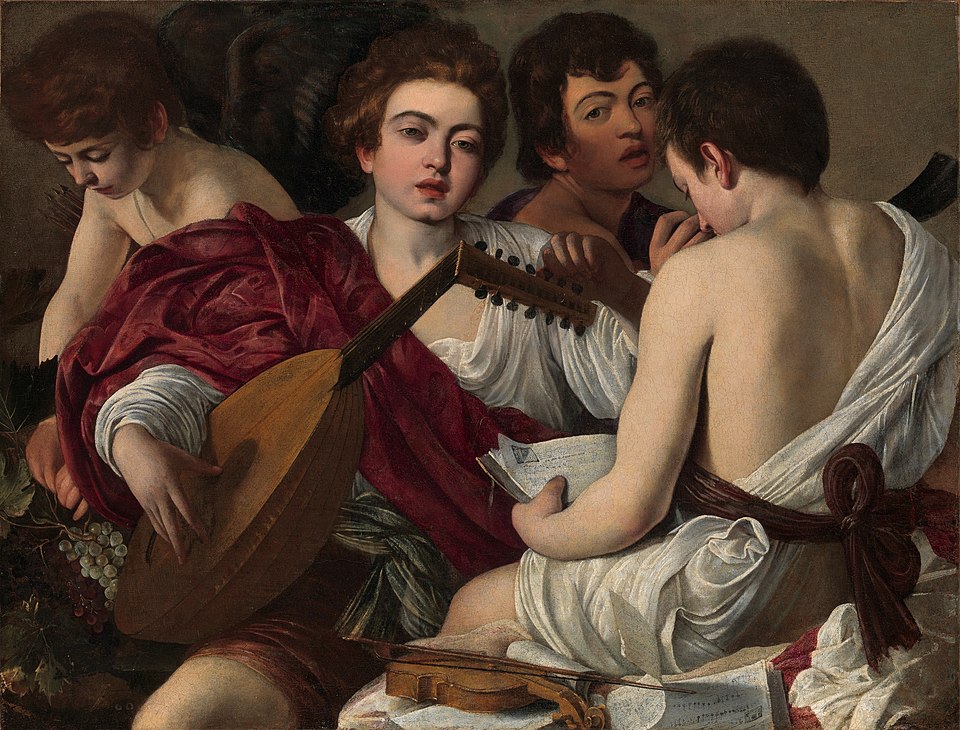
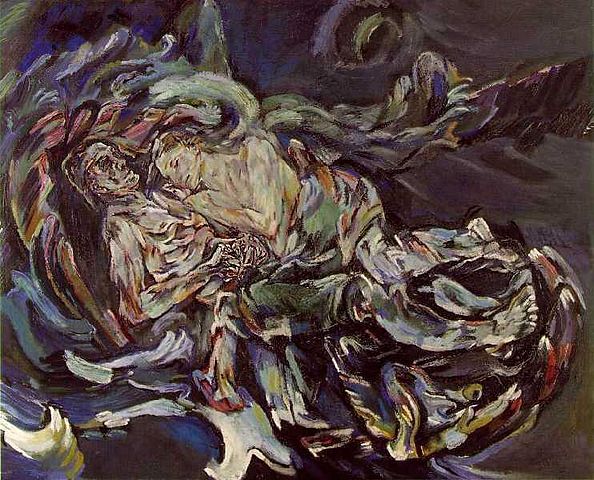
👉 Caravaggio (Left):
- flawless
- photographic
- controlled
- closed interpretation
You see what is shown. Nothing more.
👉 Kokoschka’s Bride of the Wind (Right):
- distorted
- rough
- emotionally unstable
- compositionally open
- imperfect
Viewers project emotion into the gaps. Interpretation participates. That creates depth. Masterworks endure, Because they remain open to projection. Imperfection creates entry. But Imperfection is not just about functional flaws. Rather, it’s a question of whether there is room for different perceptions or imagination. It’s just like how in photography, a shot that leaves some ’empty space’ is often more highly regarded. Please refer to the following article for how to apply imperfection.
(5) Go Beyond the Italian Frame — Offer a New Lifestyle
Starbucks is no longer Italian. It is fully American. But for Americans, that lifestyle is no longer aspirational. Aura weakens when aspiration disappears. Starbucks Reserve suggests headquarters understands the problem. Lifestyle aura has gone stale. This deserves its own chapter.
4. Starbucks Reserve Stores vs. the Japanese Tea Ceremony
(1) Starbucks Reserve Stores
Reference Youtube video: Starbucks Reserve New York
I once visited a Starbucks Reserve store in Seoul. This analysis starts from that visit. In simple terms, Reserve follows one message: “Let me prove, step by step, how rare and expensive this coffee is.”
Regular Starbucks stores hide the process. You rarely see:
- bean origin
- roasting steps
- extraction detail
Reserve does the opposite. Everything is displayed. Why? Because Reserve assumes customers are paying for coffee “specialness.” Process transparency is used to justify price.
Most customers don’t visit Starbucks for coffee alone. They come for:
- conversation
- comfort
- casual social space
Starbucks Reserve is a museum that explains why its coffee is special. In excruciating detail. Too focused on the experience of drinking coffee. But people don’t drink coffee just for the taste. Coffee is a ritual habit. In other words, Coffee is the medium — not the destination. Remove the logo. Run a blind taste test. How many say: “I’ve never tasted anything like this”? Very few. What matters more is the environment. But Reserve changes the stage completely. You enter and see:
- premium beans displayed
- copper pipes across the ceiling
- industrial-scale roasters
- mechanical sound
- performance brewing
It feels less like a café, more like a coffee factory concert. Baristas narrate every step: flavor notes, extraction theory, tasting method. No one says directly: “This is why $12 is cheap.” But after enough explanation, you feel pushed to agree. But, Few people are willing to pay a premium for the physical properties of coffee or the uniqueness of the brewing process. That is a topic only coffee connoisseurs go crazy for; the general public doesn’t know, nor do they care, how great Starbucks coffee actually is. so what’s the point of putting those on display? People just take a photo and leave. What people truly love is the uniqueness of the space where they drink it.
(2) The Japanese Tea Ceremony
Starbucks Reserve makes everything visible. But visibility is not depth. It breaks “specialness” into components — and drains temporal meaning. No past accumulation. No future anticipation. Only present spectacle. Japanese tea ceremony (chado) works differently. It is a ritual for learning the transience of time, the preciousness of the present moment, and human humility in nature.
Before tea is served, host and guest often share a short phrase or verse. This opens new perception. It frames the moment. Meaning emerges through reflection — not product explanation. The host never boasts perfection, hygiene supremacy, premium status. Tea is just the medium. What resonates is:
- season
- presence
- relationship
- atmosphere
- Zen experience
The reason Japanese tea ceremony is so special lies partly in the natural properties of the tea itself. However, its essence is found in participating in the ritual, where one learns the profound meanings embedded in the tea and the space—such as the preciousness of the seasons or the Zen Buddhist concept of the transience of life. This aesthetic tradition of Japan is called Wabi-sabi. Guests project memory into objects. Objects invite interpretation. If you are interested with Wabi-sabi [See: Wabi-Sabi and Participatory Perception: A Phenomenological Management Theory for B2C]
Shall I explain a little more about rituals? Meaning appears through gesture:
- wiping the bowl
- preparing slowly
- handling tools with care
This means that the barista plays the role of a shaman. Tea becomes sincerity made visible. Guests respond with: humility, gratitude, attentiveness. Ordinary leaves become sacred through temporal context. Chado is: a seasonal time ritual binding people through respect and humility.
I am not suggesting that you start selling ‘spiritual experiences.’ My point is to pay attention to the software—in this case, Zen Buddhism—that transforms the mundane act of drinking green tea in an old, weathered house into an extraordinary experience. It is a way to achieve the highest ROI while investing almost nothing in hardware. Starbucks Reserve pours massive amounts of money into hardware, but has absolutely no interest in software.
Can Starbucks evolve beyond Reserve — toward something closer to Chado? Toward Real Experience.
5. The Strength of Small Independent Shops: Why Endorphin Stores Last
Starbucks erased human traces in the name of efficiency. Independent stores can do the opposite.
An owner’s lifestyle itself can become aura.
Customers sense worldview through:
- menu choices
- layout
- small details
- object selection
Sen no Rikyu, who perfected the Japanese Way of Tea, wasn’t just a monk—in today’s terms, he was the owner of a Zen Buddhist cafe! LOL. He was truly the ultimate CEO. Haha.
Let’s break this down.
(1) Let Time Accumulate
Long-term owners and staff become part of the store itself. Customers remember moments like:
- a gruff owner suddenly offering citron tea
- an awkward staff argument
- an unexpected joke
Unplanned moments create layered visits. Each visit feels slightly different. Aura grows through variation. Furniture does not need constant replacement. Some customers claim: “Our table.” Because: they talked there, they ate there, they liked that seat. That corner becomes memory space.
Constantly spending money to change ‘hardware’ like new menus or interiors feels like cheap, forced novelty to customers because you’re constantly injecting new meanings. Customers actually pay a premium for the space to imagine meaning for themselves. They value preserved memories and an owner who recognizes them as regulars. That’s why many shops in Korea used to allow customers to leave signatures or messages on the walls. Seeing a note I left back in 2008 was a truly refreshing experience; you simply can’t forget a place like that. This is the power of accumulated temporality. If you focus only on customers who chase constant novelty, you’ll end up in an inefficient cycle of daily changes, which destroys investment efficiency for small business owners.
(2) Immerse in the Local Lifeworld
Starbucks chose global sameness. The cost was temporal depth. Stores became: theme parks (Reserve) Or vending machines (standard stores). Efficiency replaced belonging. Yes, Starbucks runs local campaigns:art tie-ins, limited editions, seasonal goods But customers experience these as events — not lived time.
Independent owners can embed into local time flow. When I closed my own store before emigrating, a customer told me: “I came here before I married — and again after. I’m sad it’s closing.” That is life-embedded memory. If one Starbucks closes, customers go to another. That is the structural difference.
(3) Customers Read the Owner Through the Space
Nothing in a small shop is truly random. Owners choose things based on: flow, hygiene, efficiency, aesthetics. Customers may not analyze it — but they feel it.
Sitting in the space is reading the owner’s lifestyle.
A simple wooden sign: Chef Is On Duty can signal: care, responsibility, pride. Different guests interpret differently. When interpretation resonates with personal memory, admiration appears. That admiration is the seed of aura. Starbucks no longer produces this effect. Independent owners still can.
Show your style. Let customers feel it.
Table — Reserve vs. Chado vs. Independent Shops
| Aspect | Starbucks Reserve | Japanese Chado | Independent Shops |
|---|---|---|---|
| Temporality | Consumes only the present. No past or future context. | Embeds seasons, years, and natural cycles. | Time accumulates through regulars, memories, and daily traces. |
| Participation | Guests are spectators. Experience is performed. | Guests join the ritual and co-create meaning. | Experience grows through interaction, accidents, and relationships. |
| Mode of Meaning | Over-explains beans and extraction. Justifies price. | Meaning conveyed through gesture and symbolism. | Owner’s style is felt through food, space, and details — without explanation. |
| Aesthetics | Perfect, symmetrical, display-oriented. | Imperfect, asymmetrical, time-worn (wabi-sabi). | Worn furniture and local mood create lifeworld texture. |
| Communication | Brand → customer (one-way). | Host ↔ guest (mutual resonance). | Owner ↔ customer (ongoing dialogue). |
| Customer Experience | Photograph → post → one-off memory. | Awe and seasonal unity → sacred moment. | “Our spot,” shared memories — each visit feels new. |
| Aura Source | Display of brand power. | Emerges from time, imperfection, participation. | Emerges from human traces and lived lifestyle. |
6. Conclusion — How Aura Disappears, and Where It Still Lives
This essay examined the Theory of Aura Dissolution. Yes, the framework leaned on Maurice Merleau-Ponty’s phenomenology. But the core idea is simple.
Customers live inside their own lifeworlds.
Their time accumulates. Their situations change. Their perception changes with each visit. A store is never experienced the same way twice — if time is allowed to remain.
Cut away time, and space fossilizes. No accumulation. No reinterpretation. No renewal. Aura disappears. What remains is preserved structure — not living experience.
When aura is gone, premium must be justified mechanically: bean origin, roast method, extraction detail. Starbucks Reserve has to explain itself because it’s selling something that doesn’t connect. But what resonates emotionally needs no explanation.
The small business owner must make the customer feel resonance — through what they sell, through how they serve. You can’t beat Starbucks by explaining how special your coffee is. They already do that. Better. Independent owners still hold the lost advantage. They can embed: time, imperfection, human trace directly into their spaces. Not through scale. Through presence.
Aura dies when time is erased, but thrives in the traces life has placed.

If you enjoyed this article, you can support the project – thank you!